

DIY Rustic Chic Wine Display
Did you know that the wine bottle was specially designed for better aging and safe transportation? Ancient ways of manufacturing glass were inconsistent, difficult, time-consuming, and the result was much more delicate than the glass we have in our homes now. With the invention of the coal-burning furnace in the 1700's, thicker, heavier glass could be manufactured, which meant that the bottle was sturdier to ship than its more delicate predecessor. Winemakers also began to realize the importance of aging their wine in the 1730's, and wanted to be able to see the sediment form while the wine bottle rested on its side. Glassmakers then stretched the length of the bottle to give winemakers a larger area to monitor the aging process, producing the classic bottle shape we see today.
It's no secret that the shape of a wine bottle is a lovely thing, and we firmly believe that every bottle of wine is a work of art worthy of being displayed. So much so, that we want every wine-loving home to have a beautiful way to display their wine. Our solution? We put together a simple, rustic wine rack that anyone can build! Fill this with wine bottles, add a gorgeous set of stemware, and you'll draw a number of "ooh's" and "ahh's" from your party guests!
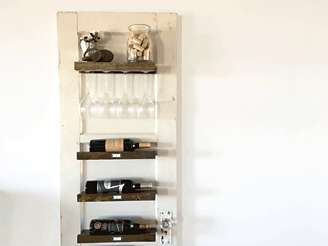
DIY: Rustic Chic Wine Display
Supplies needed:
• A vintage door OR a backboard of your choice (large wood board[s], old shutter, etc.)
• Wood (based on our shelf measurements and quantity):
-
2 - 1x4's (for the bottom of the wine bottle shelves)
-
2 - 1x2's (for the ledge of the shelves)
-
1/2" thick wood strips
-
Rectangle dowels, min. 1/4" length (to hold stemware; can be anything, like a yardstick. Make sure these are NOT balsa wood!)
• Polyurethane (a.k.a. clear coat; we used Minwax water-based semi-gloss)
• Bookplates, or other preferred hardware (Pictured: These bookplates)
• Optional: Tie Plate/L-Bracket, or other mounting hardware to secure to a wall, if needed
Tools needed:
• Saw (miter if you have one, or a hand saw will work)
• Electric Sander or Sandpaper
• Drill, drill bit and screws
• Brad nailer/brads
• Measuring tape
• Rubber gloves (for staining)
• Old T-shirt or rag (for staining)
• Paintbrush (for polyurethane)
• Elmer's Wood Glue
• Clamps
• Level
• Hammer (for bookplates; optional)
• Decorative nails (for bookplates; optional)
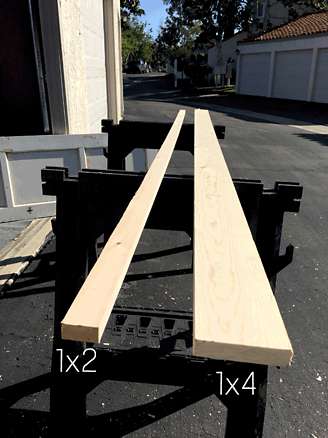
Directions:
1. If you're using a vintage door or shutter, you have the option of stripping it, sanding it, re-staining it/repainting it, or using it as-is. If you've chosen to use a piece of wood that suits the area you'll be putting your wine display, then you'll need to sand it and stain/paint it how you desire.
2. Time to start building! We’ve included some in-depth instructions here, so don’t be intimidated by the length of this DIY article. We wanted to be as thorough as possible, that way anyone, of any skill level, can do this!
Building Your Wine Bottle Shelves:
1. Determine the length you want your shelves to be; ours were 15" long. If you are unable to cut the wood at home, have an employee at Home Depot or Lowes cut the wood for you when you purchase it. The 1x4's, 1x2's, wood strips, and dowels need to be cut to the same length. (i.e. since our shelves were 15" long, each 1x4 and 1x2 were 15" as well.)
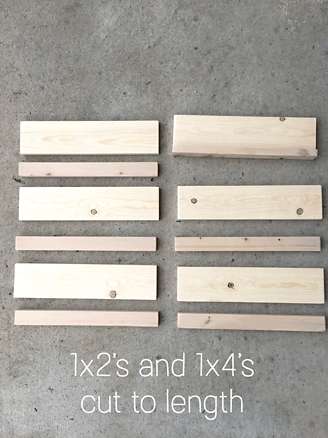
2. Using your electric sander or a piece of sandpaper, sand the surface and edges of the wood until no rough edges remain. You want a nice, smooth surface, that way the wood stain absorbs evenly. Wipe the boards off with a damp cloth to remove any sawdust.
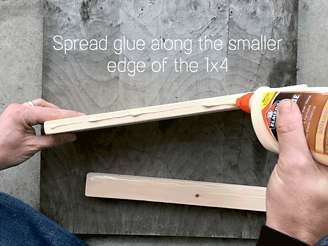
3. Now that your wood is smooth, it's time to put your pieces together to create the shelves. First, spread an even layer of wood glue on the small edge of the 1x4 and the piece of the 1x2 that should press against that edge. (See photo for reference; if you look at your 'shelf' from the side, it should be forming an L-shape.) Apply enough glue so that it squeezes out when the two wood pieces are pressed together (see step 5 below).
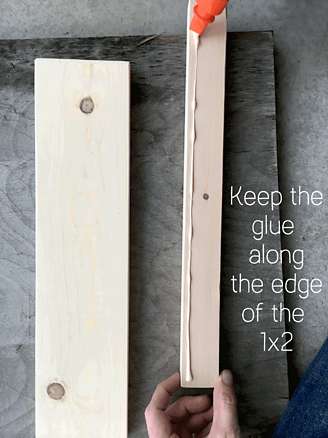
4. Here's where the clamps come in handy. Clamp the pieces together firmly and immediately nail them together using a brad nailer and brads - or hammer and brad nails. (Don't worry if you don't have clamps - the nails will do the trick. Clamps just make it easier on you!)
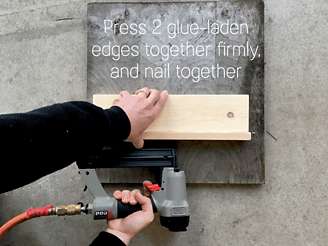
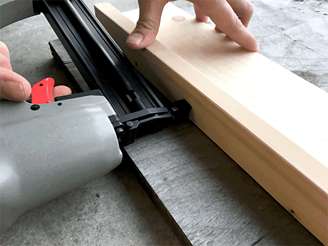
5. After the pieces are nailed together, the wood glue should squeeze out from the seams; that's ideal. Take a damp paper towel to wipe up the extra wood glue, making sure there are no drips left behind. (Any exposed glue will affect the way the stain absorbs.) Make sure your shelves have at least 30 minutes to an hour for the glue to dry.
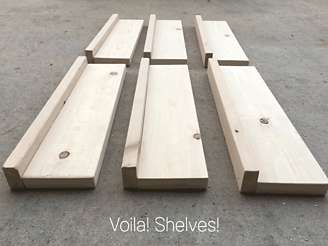
6. Repeat steps 3-5 for all of your wine bottle shelves.
Building Your Stemware Shelf
1. This shelf is just as easy the other shelves - the only difference is that you're building this one upside-down, with a little bonus! Where the "lip" on the wine bottle shelves faced upwards so as to keep a wine bottle on the shelf, the lip on the stemware shelf will be facing downwards in order to secure the stemware upside-down. You will also be adding your wood strips to the back of the shelves to create a C-channel (google it - it'll make sense once you see it).
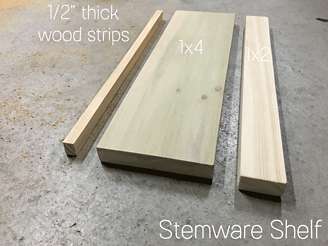
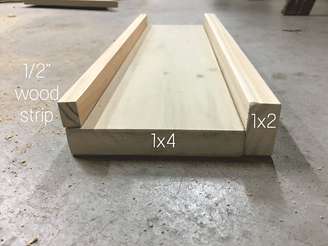
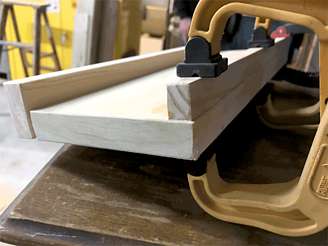
2. Repeat steps 2-5 above, crafting this shelf just like you did the bottle shelves, with the addition of the wood strips as pictured.
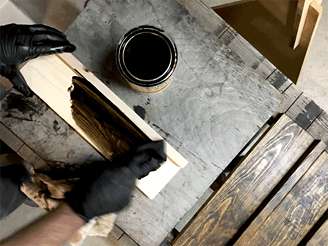
3. Once all your shelves are assembled, it's time to stain them, along with the dowels (which shouldn’t be attached yet). Wearing your rubber gloves, use an old T-shirt or lint-free rag to apply the stain to the wood. Rub a thin layer of stain on until the entire shelf/dowel is covered, being watchful for drips or runs in the stain. If you want the shelves to be even darker, apply another coat of stain after the dry time specified on the stain can.
4. Once the stain is fully dry, apply 1-2 coats of polyurethane with your paintbrush to your shelves, being watchful for any drips or runs. Allow time to dry according to the directions on the can.
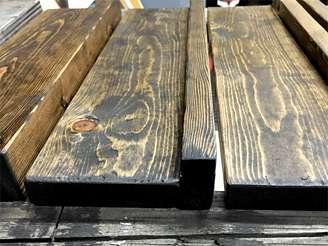
5. Once that is completed, use your 1/2" dowels to create the "slides" for the base of your stemware (as pictured). Be sure you measure the diameter of the base of your stemware before you begin this process. (Pro tip: set the shelf on a flat surface upside-down, and set your stemware right-side up on it, like you would if you set the glass on a table. This way you can easily "eyeball" the width needed for your slides to fit your stemware.) Depending on your stemware's diameter, cut the dowel pieces to the necessary depth to hold your stemware. (See the photos for reference.)
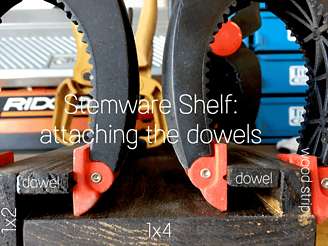

6. Because stemware is light weight, the slide pieces only need to be attached to the shelf with wood glue - this stuff is insanely strong, so don't worry. This requires a clamp. In dire circumstances, large binder clips could work, but we highly recommend the clamps found at your hardware store. Double-check that your stemware will fit inside the C-channel slides. (We know what this is now! Thanks, Google!)
Attaching the Shelves to Your Backboard:
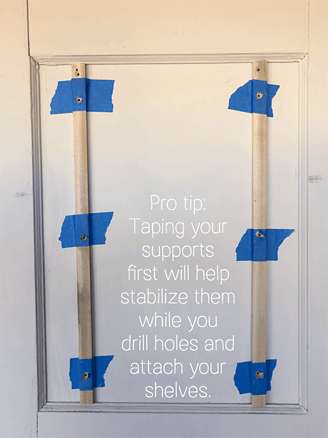
1. Depending on the thickness of your backboard, you may need to add support braces that will help handle the weight of the shelves, wine bottles, and stemware. Our door panels were thin and needed additional support (see pictures). If no support is needed, skip to Step 2.
-
We added thin strips of wood to the back of the door to add additional support. You can use plywood, or small strips of wood, like we did. We measured 2" in from the edges of where the shelves would be placed and attached strips all the way down the backside of our door (see pictures).
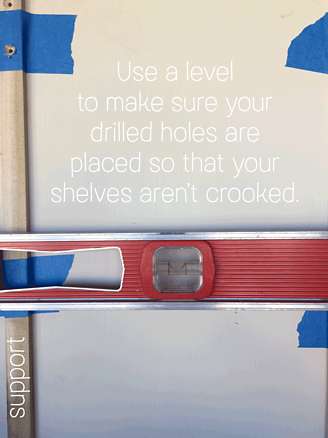
3. Be sure to pre-drill the holes for your screws; this prevents the wood from splitting. Use a drill bit slightly smaller in diameter than the post of your screws. We also used a level to ensure our shelves weren't crooked. If you don't own a level, an eyeball can usually pass the test (so long as you haven't already poured a glass of wine).
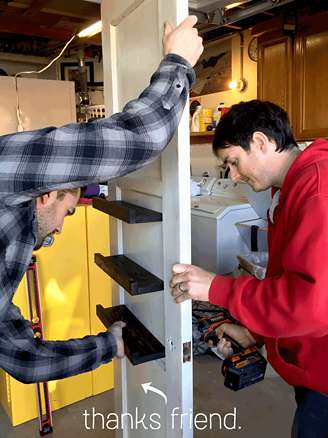
4. Now that they're pre-drilled, grab a friend to help you. Have your friend hold the shelves on the front of your backboard, right where you pre-drilled your holes. Drill the screws in from behind, through your backboard (or your supports), and into the backside of your shelves. (You can do this on your own, but a friend makes it easier and fun - especially when there's a celebratory glass of wine involved!)
Adding Your Hardware:
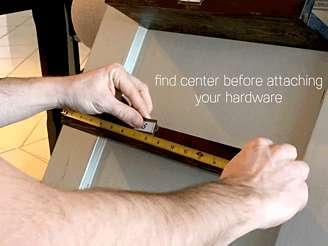
1. If you are adding bookplates to your shelves, as we did, this is easy! Measure the width of your shelves and divide it by two (to find the center). Screw/nail your bookplates in so that they're centered, both left-to-right and top-to-bottom. Don't overthink it - eyeballing it is fine when it comes to this.
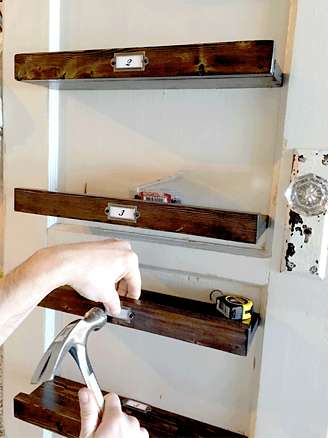
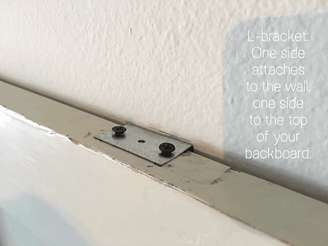
2. If your wine rack is heavy, or if you have curious pets, you can easily secure this to your wall using an L-Bracket. We found an extra tie plate in the garage that we decided to use instead, so if you're able to bend it like we did (see pictures), this is an option for you as well. Make sure the L-Bracket isn't bigger than the depth of your backboard, that way it's hidden from sight.
3. Decorate your Rustic Chic Wine Display, pop the cork on a bottle, and celebrate your beautiful, new way to display your wines!
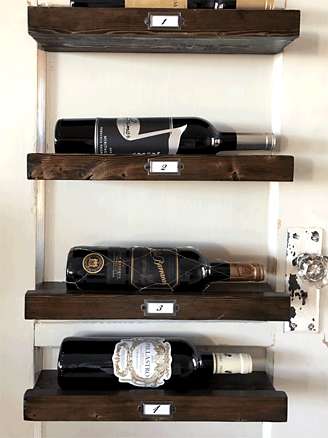
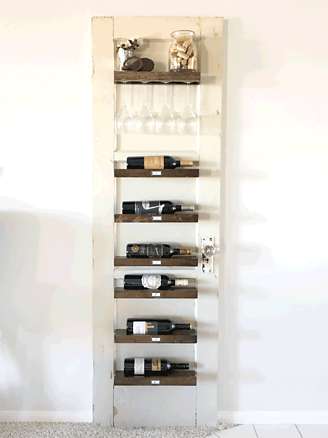
We'd love to see your wine racks, displays, and storage ideas! What have you come up with? Show us on Facebook, Twitter, and Instagram!